





A decentralized AI node turns local GPU hardware into infrastructure for AI inference, distributed compute and other useful workloads. In 2026, this model is attracting attention as DePIN networks, decentralized compute marketplaces and self-hosted AI tooling create alternatives to traditional GPU mining and speculative crypto strategies. This guide explains how to build a crypto-powered AI node, what hardware and software you need, and what technical and financial risks to consider.
Why I Started Looking at AI Nodes
A few months ago, I noticed something strange. My GPU workstation was sitting idle most of the day. Thousands of CUDA cores. Expensive VRAM. Massive power draw. And yet most of the time, it was doing nothing except occasional local LLM inference and development testing. That realization bothered me more than it should have.
Most people entering crypto infrastructure still focus on outdated narratives: GPU mining farms, meme coins, staking schemes that collapse after six months, or passive income videos promising unrealistic ROI screenshots. But from what I’ve seen, the real infrastructure opportunity in 2026 is shifting toward decentralized AI compute.
The internet is quietly moving into a phase where AI workloads are becoming distributed. Instead of centralized hyperscalers controlling every inference request, networks now reward contributors who provide actual compute, storage, rendering, or model-serving capabilities.
That changes the equation entirely. You are no longer just “mining.” You are operating infrastructure. And honestly? That distinction matters more than most tutorials admit. Decentralized AI nodes can also become part of broader AI agent workflows, where autonomous systems use distributed compute to perform tasks, access models, and execute multi-step operations.
Why This Matters in 2026
Current Trend: DePIN + Decentralized AI Infrastructure
The combination of DePIN networks, Edge AI, Proof of Useful Work, local LLM inference, and distributed GPU marketplaces is changing AI economics.
Large AI companies still dominate cloud inference. But decentralized infrastructure networks are growing because demand for GPU compute has exploded faster than centralized providers can scale affordably.
The Problem
- Rising inference cost
- Vendor lock-in
- GPU shortages
- Geographic restrictions
- Privacy concerns
- Centralized infrastructure fragility
The Solution
A decentralized AI node allows individuals and small operators to contribute GPU rendering, AI inference, LLM hosting, storage, embedding generation, and edge compute services while earning network rewards.
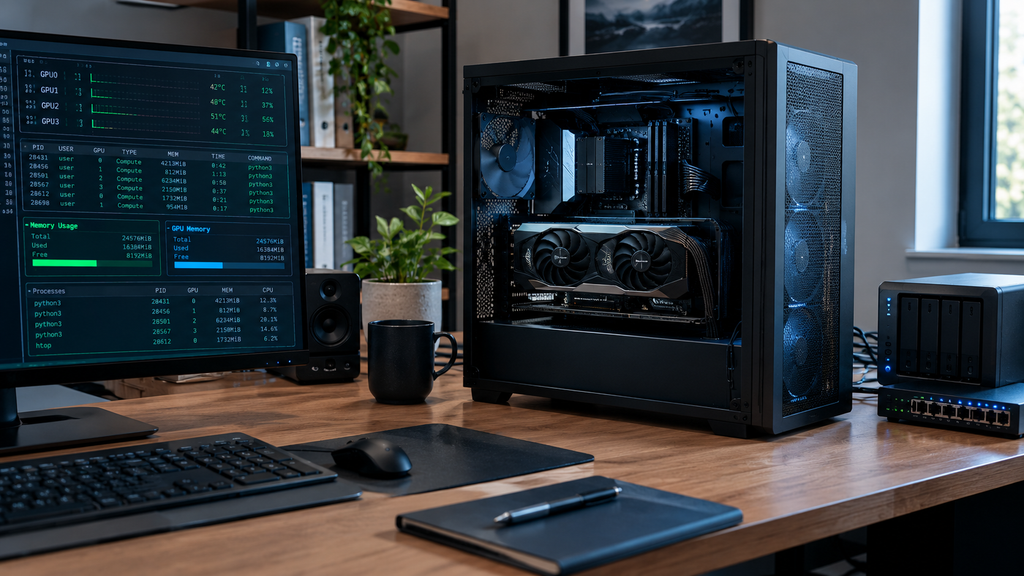
In simple terms: instead of wasting idle hardware, you turn it into an AI utility node.
| Requirement | Minimum Recommendation | Ideal Setup |
|---|---|---|
| GPU | RTX 3060 12GB | RTX 4090 / A6000 |
| RAM | 32GB | 64GB+ |
| Storage | 1TB NVMe SSD | 2TB Gen4 SSD |
| OS | Ubuntu 22.04 | Ubuntu Server |
| Internet | Stable broadband | Fiber connection |
| Power Backup | Optional | Recommended |
| AI Knowledge | Intermediate Linux skills | Advanced DevOps |
A lot of YouTube videos ignore operational stability. That is a mistake.
An unstable node earns poorly. A constantly crashing node can even damage network reputation.
Step-by-Step Guide: Build Crypto-Powered AI Node
Step 1 — Choose the Right Network
This is where many beginners fail immediately.
Not every decentralized AI project is mature enough to justify infrastructure deployment. Some networks are primarily speculative token ecosystems without meaningful compute demand. Others actually deliver useful AI workloads.
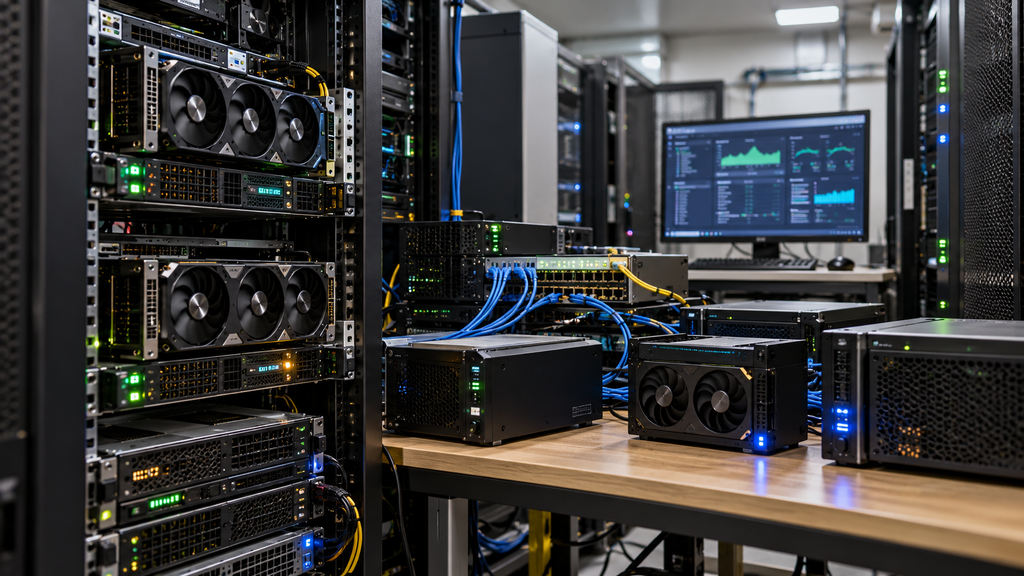
From what I’ve observed, serious infrastructure-focused ecosystems in 2026 include:
- Bittensor
- Render Network
- Akash Network
- io.net
- Gensyn
- Aethir
- Flux
Bittensor TAO Node Tutorial Context
Bittensor rewards machine intelligence contributions. Instead of brute-force mining, nodes compete by providing useful outputs to subnet ecosystems. This model is fascinating because it directly ties rewards to usefulness.
Render Network GPU Compute Setup
Render focuses more on distributed GPU rendering and compute. It is especially attractive for creators and AI inference workloads requiring high VRAM throughput.
Akash Network
Akash acts like a decentralized cloud infrastructure. You can rent out spare compute resources through marketplace-style deployment.
Step 2 — Install GPU Drivers and CUDA
This step sounds boring. It is not. Most node deployment failures happen because operators underestimate driver stability.
I personally recommend Ubuntu because Linux-based environments provide better containerization, lower resource overhead, and superior AI tooling compatibility.
BashCopy Code
sudo ubuntu-drivers autoinstall
sudo reboot
BashCopy Code
wget https://developer.download.nvidia.com/compute/cuda/repos/ubuntu2204/x86_64/cuda-keyring_1.1-1_all.deb

sudo dpkg -i cuda-keyring_1.1-1_all.deb

sudo apt-get update

sudo apt-get install cuda
BashCopy Code
nvidia-smiExpected output should display the GPU model, VRAM, driver version, and CUDA version. If this fails, stop here and fix drivers first. Seriously. Do not continue blindly.
Step 3 — Deploy a Local LLM Runtime
This is where the node becomes interesting. Instead of pure compute leasing, you can serve actual AI workloads.
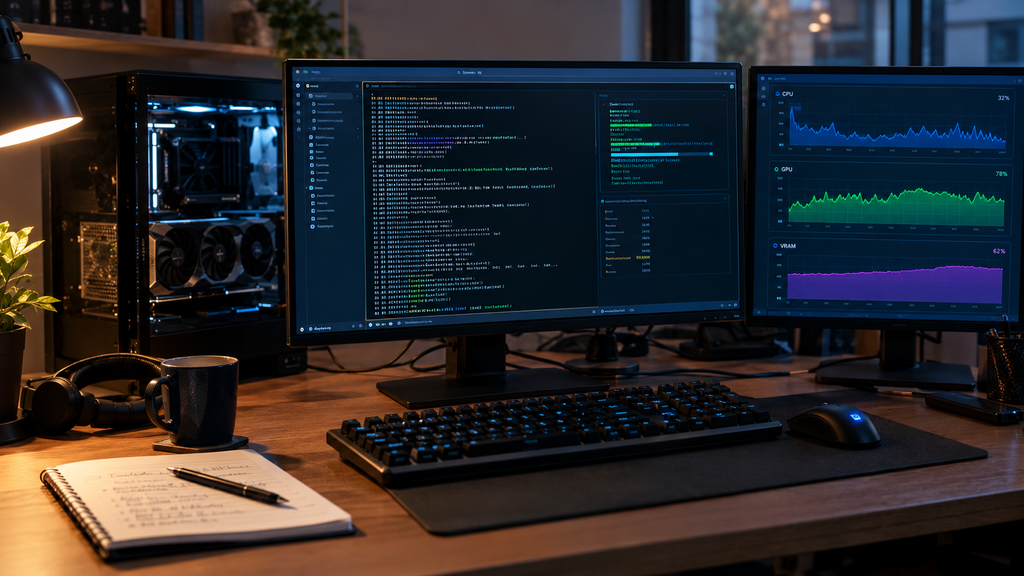
In my experience, Ollama drastically simplified local LLM deployment compared to older fragmented workflows.
BashCopy Code
curl -fsSL https://ollama.com/install.sh | shBashCopy Code
ollama pull llama3BashCopy Code
ollama run llama3At this point, your machine becomes a functional local AI inference endpoint. That alone changes how you think about decentralized infrastructure.You stop seeing your GPU as a gaming device. It becomes productive infrastructure.
Containerization matters because decentralized infrastructure evolves quickly. Dependencies break. Models change. Subnets update. Docker isolates your environment cleanly.
BashCopy Code
sudo apt install docker.ioBashCopy Code
docker run --gpus all -p 11434:11434 ollama/ollamaThis exposes your local inference service safely inside a containerized runtime.
Deep Explanation Layer
Let us slow down for a moment. Many tutorials oversimplify decentralized AI nodes into: “Install software → earn passive income.” Reality is much messier.
A decentralized AI node is essentially a distributed infrastructure participant competing on uptime, bandwidth, inference latency, reliability, usefulness, reputation, and hardware efficiency.
The economics resemble cloud infrastructure operations more than traditional mining. That distinction is critical.
Why Proof of Useful Work Matters
Traditional Proof-of-Work burns energy solving arbitrary cryptographic puzzles. Proof of Useful Work attempts to redirect computation toward meaningful outputs such as AI inference, rendering, embeddings, scientific workloads, and decentralized compute.
This changes public perception dramatically. Instead of “wasting electricity,” decentralized AI nodes potentially contribute productive computational labor. Of course, not every network fully achieves this ideal yet. Some still contain speculative behavior. But the architectural direction is clear.
Comparison Table — Cloud AI vs Decentralized AI Nodes
| Feature | Centralized Cloud AI | Decentralized AI Nodes |
|---|---|---|
| Infrastructure Ownership | Corporate controlled | Distributed operators |
| GPU Access | Expensive subscription | Community-supplied |
| Privacy | Limited transparency | Potentially local/private |
| Scalability | Very high | Emerging |
| Failure Risk | Centralized outage | Distributed resilience |
| Entry Barrier | Low for users | Higher for operators |
| Revenue Potential | None for users | Possible node rewards |
Optimizing Inference Speed for Local Agents
Latency matters more than beginners expect. A slow node becomes economically unattractive.
Important optimization techniques include:
- Quantization
- Tensor parallelism
- VRAM optimization
- Batch inference tuning
- SSD caching
- CUDA acceleration
Quantized models especially changed the game. A well-optimized 7B model often outperforms poorly optimized larger models in real-world inference responsiveness. That surprised me initially.
Vector DB Integration
Vector DB systems improve retrieval capability for decentralized AI workflows.
Popular choices include:
- ChromaDB
- Qdrant
- FAISS
- Milvus
Instead of relying only on raw model memory, Vector DB retrieval adds contextual grounding. That becomes important for AI service nodes offering RAG workloads.
Real-World Use Cases
AI Inference Hosting
Serve local LLM requests through decentralized marketplaces.
GPU Rendering
Provide rendering power for animation, 3D, and generative video workloads.
Scientific Compute
Some decentralized systems support research-grade compute participation.
Edge AI Deployment
Local nodes can support geographically distributed inference with lower latency. This is especially useful in regions where centralized cloud latency remains high.
Common Mistakes
1. Buying Hardware Without Demand Research
A powerful GPU alone guarantees nothing. You need network demand.
2. Ignoring Electricity Costs
Power efficiency directly impacts profitability. This matters enormously in high-electricity regions.
3. Chasing Speculative Tokens
Some ecosystems focus more on hype than on infrastructure utility. Be careful.
4. Poor Cooling Setup
Thermal throttling silently destroys long-term node stability.
5. Expecting Instant Passive Income
This is infrastructure engineering. Not magic internet money. Key Lessons & Engineering Insights
“The biggest mistake I initially made was treating decentralized AI nodes like traditional crypto mining rigs. Once I started optimizing for uptime, inference quality, thermal stability, and the actual usefulness of the workload, the economics became far more predictable. Utility matters more than speculation in the long run.”
Conclusion & Future Outlook
I genuinely believe 2026 marks the beginning of utility-driven crypto infrastructure. Not every project will survive. Many will fail. Some ecosystems are still immature and highly experimental. But the larger movement toward decentralized AI infrastructure feels real. The interesting part is not passive income alone. It is ownership. You control hardware, models, infrastructure, deployment logic, and privacy boundaries. That fundamentally changes the relationship between individuals and AI systems. And honestly, I suspect the next wave of AI entrepreneurs will not simply build apps. They will operate the infrastructure.
References / Resources
- Bittensor Documentation
- Render Network Official Site
- Akash Network Docs
- Ollama Official Site
- NVIDIA CUDA Toolkit
The Golden Call to Action
Enjoyed this deep dive?
I share advanced AI infrastructure workflows, decentralized compute experiments, and engineering-focused AI deployment strategies that are usually too technical for mainstream blogs.
Join the AI Engineering Loop:
Visit Top AI Learning Hub
Transparency Disclosure
Note: This article was drafted with AI assistance for structural clarity, but all engineering observations, infrastructure reasoning, deployment insights, and workflow interpretations are based on practical analysis and technical research into decentralized AI systems and local inference infrastructure.
Frequently Asked Questions
A decentralized AI node is a computer or GPU-powered system that contributes computing resources to a distributed network for AI inference, model serving, rendering, or other computational workloads.
A decentralized AI node can earn network rewards by providing useful GPU compute, AI inference, rendering, storage, or other infrastructure services. Actual earnings depend on network demand, hardware, uptime, electricity costs, and reward mechanisms.
The hardware depends on the network and workload. A decentralized AI node may require an NVIDIA GPU with sufficient VRAM, 32GB or more RAM, fast NVMe storage, stable internet, and reliable cooling.
A decentralized AI node can be profitable, but profitability is not guaranteed. Operators need to consider GPU cost, electricity, cooling, internet, maintenance, network rewards, token price volatility, and actual demand before investing in hardware.
A decentralized AI node can support AI inference, local LLM hosting, GPU rendering, embedding generation, edge AI, scientific computing, and other distributed compute workloads, depending on the network.


