


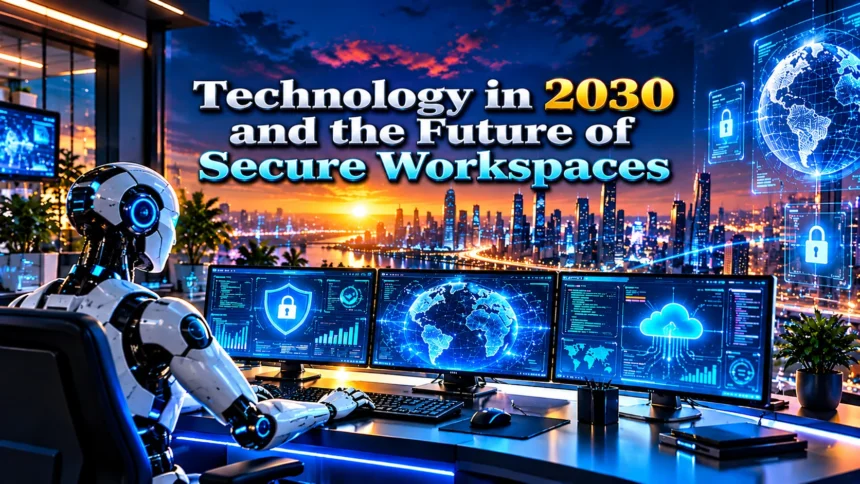
In October 2026, security leaders worldwide face a hard deadline. The U.S. National Institute of Standards and Technology (NIST) has proposed deprecating RSA-2048 and ECC P-256 encryption after 2030, because future quantum computers could break them.
That date shows why technology in 2030 is first and foremost a security question. Cheaper compute, AI-powered attacks, and quantum risk are all arriving in the same window.
Breaches are already getting more expensive. IBM’s 2026 Cost of a Data Breach Report puts the global average cost of a breach at a record $4.99 million.
As an enterprise cybersecurity architect, I build technology in 2030 readiness around ten controls. This guide explains each one in plain words: what it is, how it works, and when it is the wrong choice.
| 🔑 Key Takeaways: Technology in 2030 Security: Start post-quantum migration now. NIST plans to deprecate RSA-2048 and ECC P-256 after 2030. Replace broad VPN trust with Zero Trust Network Access (ZTNA) and SASE. Use AI and automation in security operations. IBM linked extensive use to $1.93 million lower breach costs in 2026. Protect runtime, firmware, and machines, not just the network edge. Write compliance rules as code, so audits keep pace with change. |
🌍 Why Does Technology in 2030 Change Enterprise Security?
Three shifts are landing at once in cybersecurity and emerging technologies. Attack surfaces keep growing, attackers now use AI, and new laws shorten reporting windows.
- More devices: IoT Analytics counted 18.5 billion connected IoT devices in 2024. Its forecast is 39 billion by 2030.
- Faster break-ins: The Verizon 2026 Data Breach Investigations Report (DBIR) found that vulnerability exploitation, at 31%, has overtaken stolen credentials as the top entry point.
- AI on both sides: In IBM’s 2026 report, roughly one in five organizations reported a breach of an AI model or application.
- Tighter law: Since 11 September 2026, the EU Cyber Resilience Act (CRA) has required manufacturers to report actively exploited vulnerabilities, starting with a 24-hour early warning.
Together, these shifts make security a board-level topic, not just an IT one.
Before you start any technology in 2030 project, you need four basics: a full asset inventory, one identity provider with multi-factor authentication (MFA), central logging, and a named executive owner.
Related Reading: Technology in 2030: Future Innovations of AI Cybersecurity
🛡️ 10 Essential Technology in 2030 Security Solutions
These ten controls form the security core of technology in 2030. Each one follows the same template: what it is, why it matters, how it works, and when not to use it.
Start with identity and cryptography, because they take the longest to change.
1. Zero Trust Network Access (ZTNA) for a Borderless Workforce
What it is: ZTNA connects a user to one approved application at a time, never to the whole network. It follows NIST SP 800-207, the Zero Trust Architecture standard published in 2020.
Why it matters: With a classic VPN, one stolen password can open many internal systems. Technology in 2030 will span homes, clouds, and branches, so network location can no longer prove trust.
How it works: A policy engine checks identity, device health, and context on every request. Only then does it open an encrypted, app-specific connection.
When not to use it: Old apps with hard-coded IP rules may break. Keep a short-lived, monitored exception while you modernize them.
2. Secure Access Service Edge (SASE) for Every Location
What it is: SASE joins networking (SD-WAN) and security services, such as ZTNA, a secure web gateway, and a cloud firewall, into one cloud platform.
Why it matters: In technology in 2030, the office is wherever people log in. SASE gives staff at home, in branches, or on the road the same policy.
How it works: Traffic enters the nearest point of presence (PoP). The service inspects it once, then sends it on to the app.
When not to use it: Countries with strict data-residency laws need local PoPs. Check this before you sign a contract.
👤 From the author’s practice: In my 2030 readiness framework, ZTNA and SASE work as a pair to protect a distributed workforce.
3. Post-Quantum Cryptography (PQC) and Crypto-Agility
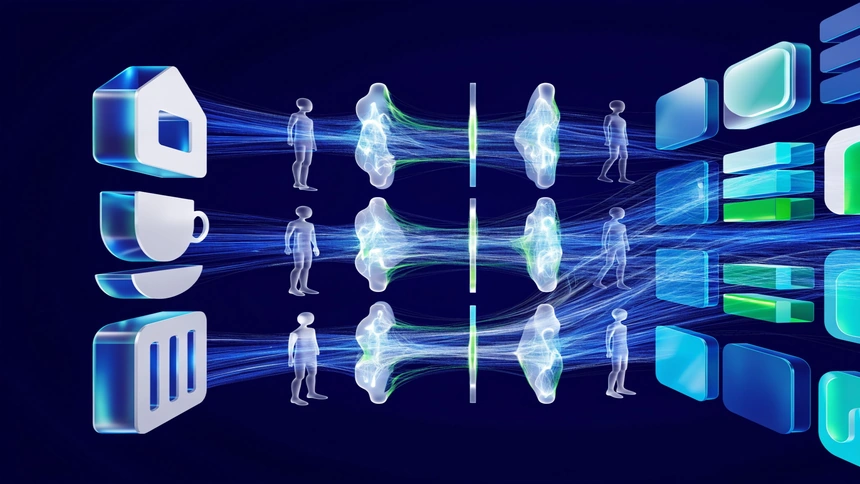
What it is: PQC uses math problems that quantum computers should not solve quickly. NIST released FIPS 203 (ML-KEM), FIPS 204 (ML-DSA), and FIPS 205 (SLH-DSA) in August 2024.
Why it matters: Attackers can “harvest now, decrypt later” by storing stolen data until quantum machines can read it. NIST’s draft IR 8547 (November 2024) proposes deprecating RSA-2048 and ECC P-256 after 2030 and disallowing them after 2035.
How it works: First, build an inventory of every certificate, key, and protocol. Next, deploy hybrid key exchange (classic X25519 plus ML-KEM) in TLS. Crypto-agility then lets you swap algorithms through configuration, not code rewrites.
When not to use it: Tiny IoT chips may lack memory for larger PQC keys and signatures. Plan a hardware refresh instead of forcing it.
👤 From the author’s practice: Among all technology in 2030 security tasks, this migration usually takes the longest. My own framework relies on lattice-based, quantum-resistant cryptography, the same math family behind ML-KEM and ML-DSA.

Want a visual walkthrough of the new NIST standards? A short video explainer helps before you plan the migration. Learn more about Cryptography Explained for Beginners.
4. AI-Driven SOAR and Autonomous Defense Agents
What it is: SOAR (Security Orchestration, Automation, and Response) runs playbooks that sort and contain alerts automatically. Machine learning ranks the alerts, and AI agents take limited, pre-approved actions.
Why it matters: Human analysts cannot read thousands of alerts a day, and technology in 2030 will only raise that volume.
| 📈 IBM’s 2026 Cost of a Data Breach Report found that extensive security AI and automation lowered breach costs by an average of $1.93 million. |
How it works: An alert triggers data enrichment and a risk score. The playbook then isolates a host, revokes a token, or blocks an IP address.
When not to use it: Never give an agent unlimited power. Require human approval for destructive steps, and protect the AI models themselves from prompt injection.
👤 From the author’s practice: In my framework, ML-driven SOAR with autonomous defense agents aims for sub-second remediation of known threat patterns.
5. Runtime Protection with eBPF Kernel Telemetry
What it is: eBPF (extended Berkeley Packet Filter) runs small, verified programs inside the Linux kernel. Security tools use it to watch processes, files, and network calls as they happen.
Why it matters: Containers may live for only minutes, and technology in 2030 will run even more short-lived workloads. Scans done before deployment cannot see what happens at runtime.
How it works: eBPF hooks report events, such as a shell starting inside a web container. Open-source tools like Falco and Tetragon turn those events into alerts or blocks.
When not to use it: Older kernels and some managed platforms limit eBPF. Check your kernel version and provider support first.
6. Kubernetes Admission Controllers and Policy Gates
What it is: An admission controller checks every object sent to the Kubernetes API server before it runs.
Why it matters: One privileged pod or unsigned image can expose a whole cluster.
How it works: Policy engines such as OPA Gatekeeper or Kyverno reject pods that run as root, use unsigned images, or lack resource limits. Kubernetes’ built-in Pod Security Admission covers the basic profiles.
When not to use it: Do not switch every rule to “deny” on day one. Run policies in audit mode first, or releases will stall.
👤 From the author’s practice: My practical lab deployments validate eBPF runtime telemetry and automated admission controllers on hybrid-cloud Kubernetes clusters.

7. Firmware Integrity and Hardware Root of Trust
What it is: UEFI Secure Boot and measured boot confirm that firmware and boot loaders are signed and unchanged. A TPM 2.0 (Trusted Platform Module) chip stores the boot measurements.
Why it matters: Firmware malware, called a bootkit, can survive an operating system reinstall. As technology in 2030 spreads to more edge devices, firmware becomes a bigger blind spot.
How it works: Devices send their boot measurements for remote attestation. Your ZTNA policy can then deny access to any device that fails the check.
When not to use it: Old hardware without TPM 2.0 cannot attest. Isolate it on a restricted segment and plan its replacement.
👤 From the author’s practice: UEFI firmware integrity checks are a standard layer in my 2030 readiness framework.
8. Automated Adversary Emulation
What it is: Adversary emulation safely replays the real tactics of known threat groups, often called APTs (advanced persistent threats). Teams map each test to the MITRE ATT&CK framework.
Why it matters: Many technology controls in 2030 look strong on paper. Emulation proves whether they actually detect an attack.
How it works: Tools such as MITRE Caldera or Atomic Red Team run scheduled tests. Every missed detection becomes a ticket with an owner.
When not to use it: Never run destructive tests on production without a change window and a rollback plan.
👤 From the author’s practice: In my lab deployments, I use automated APT adversary emulations to validate defenses.
9. Policy-as-Code for Global Compliance
What it is: Policy-as-code writes security and compliance rules as version-controlled code, for example in Rego for Open Policy Agent (OPA).
Why it matters: Rules change faster than manual audits, and technology in 2030 will bring more of them. The EU Cyber Resilience Act’s reporting duties began on 11 September 2026, and its full application starts on 11 December 2027.
| 📈 Fines under the CRA can reach €15 million or 2.5% of worldwide annual turnover, whichever is higher. |
How it works: Policies run inside CI/CD pipelines and admission controllers. The pipeline checks every change, and its logs become audit evidence.
When not to use it: Code cannot interpret legal meaning. Lawyers must still read the regulation before engineers encode it.
10. Securing IoT and the Future of Robotics and Automation
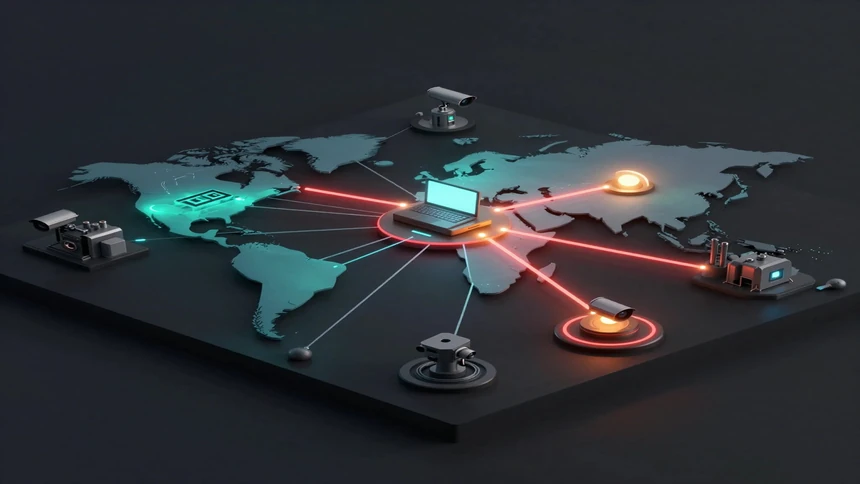
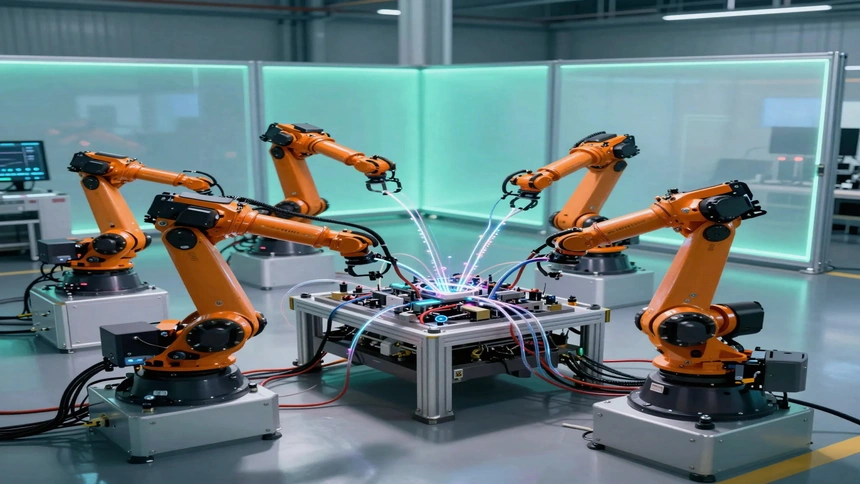
What it is: This control protects sensors, PLCs (programmable logic controllers), and industrial robots, the core emerging technologies in manufacturing.
| 📈 The International Federation of Robotics reported a record 5 million industrial robots operating in factories worldwide in 2025. |
Why it matters: Every robot is a networked computer, and technology in 2030 factories will connect even more of them. IBM’s 2026 report also warns that fewer than half of organizations actively secure non-human identities.
How it works: Split OT (operational technology) networks into zones following IEC 62443. Next, give each device a unique machine identity, and monitor industrial protocols such as Modbus and OPC UA passively.
When not to use it: Never push active scans or automatic patches onto safety-critical controllers. Vendors must certify updates first.
📊 Future Innovation Technology Compared: Which Control Fixes Which Risk?
| Solution | Main risk reduced | Effort | Realistic first step |
|---|---|---|---|
| ZTNA | Lateral movement after stolen logins | Medium | Move one high-value app behind ZTNA |
| SASE | Uneven policy across sites | Medium to high | Pilot one branch plus remote staff |
| Post-quantum cryptography | Harvest now, decrypt later | High | Build a cryptographic inventory |
| AI-driven SOAR | Slow detection and response | Medium | Automate one phishing playbook |
| eBPF runtime telemetry | Hidden container attacks | Medium | Deploy in alert-only mode |
| Admission controllers | Risky workloads entering clusters | Low to medium | Audit “no privileged pods” |
| Firmware integrity | Bootkits and firmware tampering | Medium | Enable Secure Boot, check TPM 2.0 |
| Adversary emulation | Untested detections | Low to medium | Test one ATT&CK technique weekly |
| Policy-as-code | Audit drift and manual errors | Medium | Encode your top three rules |
| IoT, OT and robot security | Unmanaged machine identities | High | Inventory and segment OT assets |
Use this matrix to match each technology in 2030 control with the risk it reduces. Effort ratings are editorial estimates, not measured benchmarks.
⚠️ Common Mistakes and Troubleshooting
Most technology in 2030 rollouts fail on order, not on tools. These are common problems and their direct fixes.
- Treating PQC as a 2035 task.
✅ Fix: Start the inventory now, and move long-lived data such as health, legal, and design files first.
- TLS handshakes fail after enabling hybrid PQC.
✅ Fix: Larger ML-KEM key shares can exceed limits in old load balancers and firewalls. Test these middleboxes in staging and update their firmware.
- Calling a VPN refresh “zero trust”.
✅ Fix: Test whether one stolen account can reach other subnets. If it can, network-level trust still exists.
- AI agents act without guardrails.
✅ Fix: Allow-list their actions, require approval for destructive steps, and log every decision.
- Admission policies block releases.
✅ Fix: Switch to audit mode, publish the violations, then enforce rule by rule.
- Machine identities never expire.
✅ Fix: Use short-lived certificates and rotate API keys automatically.
⚖️ Pros, Cons and Readiness Benchmarks
No technology in 2030 control is free. The readiness signals below are practical guidelines, not industry standards.
| Solution | Main pro | Main con | Ready to scale when |
|---|---|---|---|
| ZTNA | Cuts lateral movement | Legacy app rework | Top 10 apps run behind ZTNA |
| SASE | One policy everywhere | Vendor lock-in risk | Branch pilot meets latency targets |
| Post-quantum cryptography | Protects long-lived data | Bigger keys, more testing | Inventory covers every certificate |
| AI-driven SOAR | Faster, cheaper response | Wrong automated actions | Approval logs show few rollbacks |
| eBPF runtime telemetry | Deep live visibility | Kernel compatibility limits | Alerts are tuned, and noise is low |
| Admission controllers | Stops risky deployments | Can slow releases | Audit violations near zero |
| Firmware integrity | Detects bootkits | Old devices cannot attest | New laptops attest at login |
| Adversary emulation | Proves detection works | Needs careful scheduling | Weekly tests run without incidents |
| Policy-as-code | Continuous audit evidence | Needs legal input | Key controls auto-checked in CI/CD |
| IoT, OT and robot security | Protects production lines | Slow patch cycles | Every OT asset has an owner and zone |
🚀 Conclusion: Future Innovations and Your 2030 Security Roadmap
The measured facts behind technology in 2030 are clear: breaches cost more, attackers exploit flaws faster, and post-quantum standards already exist. Forecasts, such as 39 billion IoT devices by 2030, may shift, but the direction will not.
My grounded prediction is simple. Technology in 2030 will reward enterprises that verify every request, swap cryptography quickly, and let automation handle routine responses under human control.
🎯 Your Next Step:
Pick three controls from this list, give each one an owner, and set a 90-day milestone. The future of information technology belongs to teams that start before the deadline.
Next: How AI Is Revolutionizing Future Jobs?
📌 References and Resources
- NIST: First 3 Finalized Post-Quantum Encryption Standards (2024)
- NIST IR 8547 (Initial Public Draft): Transition to Post-Quantum Cryptography Standards (2024)
- NIST SP 800-207: Zero Trust Architecture (2020)
- IBM: 2026 Cost of a Data Breach Report Insights
- Verizon: 2026 Data Breach Investigations Report
- IoT Analytics: Number of Connected IoT Devices
- International Federation of Robotics: World Robotics 2026 Press Release
- World Economic Forum: Future of Jobs Report 2025
- Jones Day: EU Cyber Resilience Act Reporting Duties (2026)
- OpenAI: Introducing ChatGPT (2022)
(❓) Frequently Asked Questions
An IoT network is a system of connected sensors, machines, and devices that collect data and share it over the internet or private links.
IoT Analytics counted 18.5 billion connected IoT devices in 2024 and forecasts about 39 billion by 2030. Common connections include Wi-Fi, Bluetooth, cellular networks such as 5G, and industrial protocols such as Modbus.
Innovations in technology are new tools, methods, or systems that solve a real problem faster, cheaper, or more safely than older approaches.
Recent examples include generative AI, NIST’s post-quantum encryption standards released in 2024, collaborative robots, and edge computing. An idea becomes an innovation only when people actually adopt it
Generative AI chat assistants are the clearest disruptive technology of the 2020s, reaching mass use after OpenAI released ChatGPT on 30 November 2022. The transformer design behind these tools dates from 2017, but the 2020s turned it into a mass product. Standardized post-quantum cryptography, finalized by NIST in August 2024, is another breakthrough of this decade.
Technology will shift work toward AI-assisted tasks, new digital roles, and constant reskilling, while automating many routine clerical jobs by 2030.
The World Economic Forum’s Future of Jobs Report 2025 projects 170 million jobs created and 92 million displaced by 2030, a net gain of 78 million. These figures are employer forecasts, not measured results.
Robots help humans by taking over dangerous, repetitive, or high-precision tasks, so people can focus on judgment, design, and care work.
The International Federation of Robotics reported a record 5 million industrial robots operating in factories in 2025. Collaborative robots, or cobots, use force limits and safety sensors so they can work beside people.
📝 Editorial Transparency Note:
This blog post combines deep human research with AI-assisted drafting. The author reviewed the structure, the technical claims, and the cited sources before publishing. The ten controls reflect current enterprise security innovation. The technology in 2030 outlook is a reasoned hypothesis built on published data, not a promise of results. All figures follow a scientific approach: measured facts stay separate from forecasts, and each links to its source. Treat this guide as awareness material, and test every control in your own environment.
| 👨💻 About the Author: Er. Joydeep Sarkar I’m an AI Engineer, Founder, and Writer at Top Artificial Intelligence Learning Hub, exploring Technology in 2030 and Future Innovations. I uncover Hidden Secrets of AI through clear, practical insights. I explore Breakthrough ideas shaping the Future of Information Technology. My writing connects Future Innovation Technology with everyday needs and real-world challenges. I also examine the Future of Robotics and Automation, explaining how these technologies could change the way we live and work. |


